

METHODOLOGY
Every
engagement
begins with
understanding.
Sustainable execution is built through disciplined inquiry, organizational
evidence, executive interpretation, and the deliberate development
of organizational capacity.
A&A Partners works alongside leadership to understand the organization’s
current condition, identify the constraints shaping execution, establish a coordinated response, and build the operating practices required to
sustain progress.
✦
EXECUTIVE PERSPECTIVE. DISCIPLINED METHOD. SUSTAINABLE RESULTS.
THE ENGAGEMENT
Every engagement requires an understanding of the organizational conditions.
Strategy does not fail in isolation. Execution is shaped by leadership, governance, systems, financial stewardship, workflow, and organizational capacity working together.
Before recommendations are made, we develop an understanding of how those conditions currently interact and where they are constraining performance.
Only then do we determine what requires executive attention.
Recommendations are only as strong as the understanding that precedes them.
01 — DISCOVERY
We immerse ourselves in how the organization actually operates.
We don’t start with recommendations. We start by understanding the organization as it exists today—how decisions are made, where work flows, how information moves, and where leadership experiences friction.
Through interviews, observation, document review, financial information, governance materials, and operational evidence, we build a clear picture of the organization’s current operating reality.
This understanding becomes the foundation for every recommendation that follows.
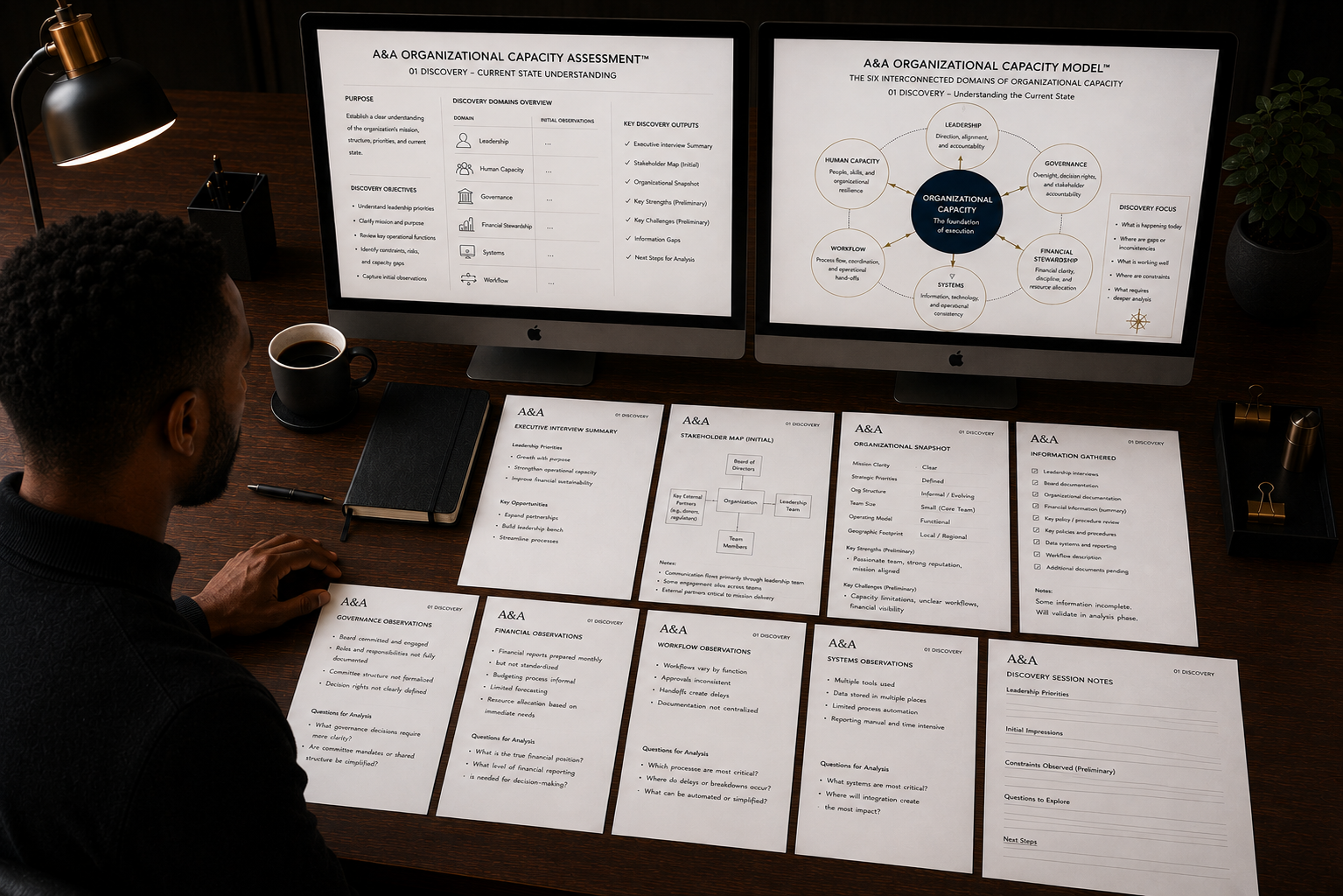
Organizations rarely need more opinions. They need an accurate understanding of how the organization actually operates.
02 — ORGANIZATIONAL ANALYSIS
Once we understand the organization, we examine the conditions shaping its ability to execute.
The information gathered during Discovery is examined through the A&A Organizational Capacity Model™. Rather than evaluating departments in isolation, we assess how leadership, governance, financial stewardship, systems, workflow, and human capacity interact to either strengthen or constrain execution.
Delayed decisions, inconsistent performance, resource strain, and operational friction rarely exist in isolation. They are signals of deeper organizational conditions. Analysis reveals how those conditions interact before determining what requires executive attention.
By understanding those relationships, we identify the structural conditions that influence execution before determining what should be addressed first.
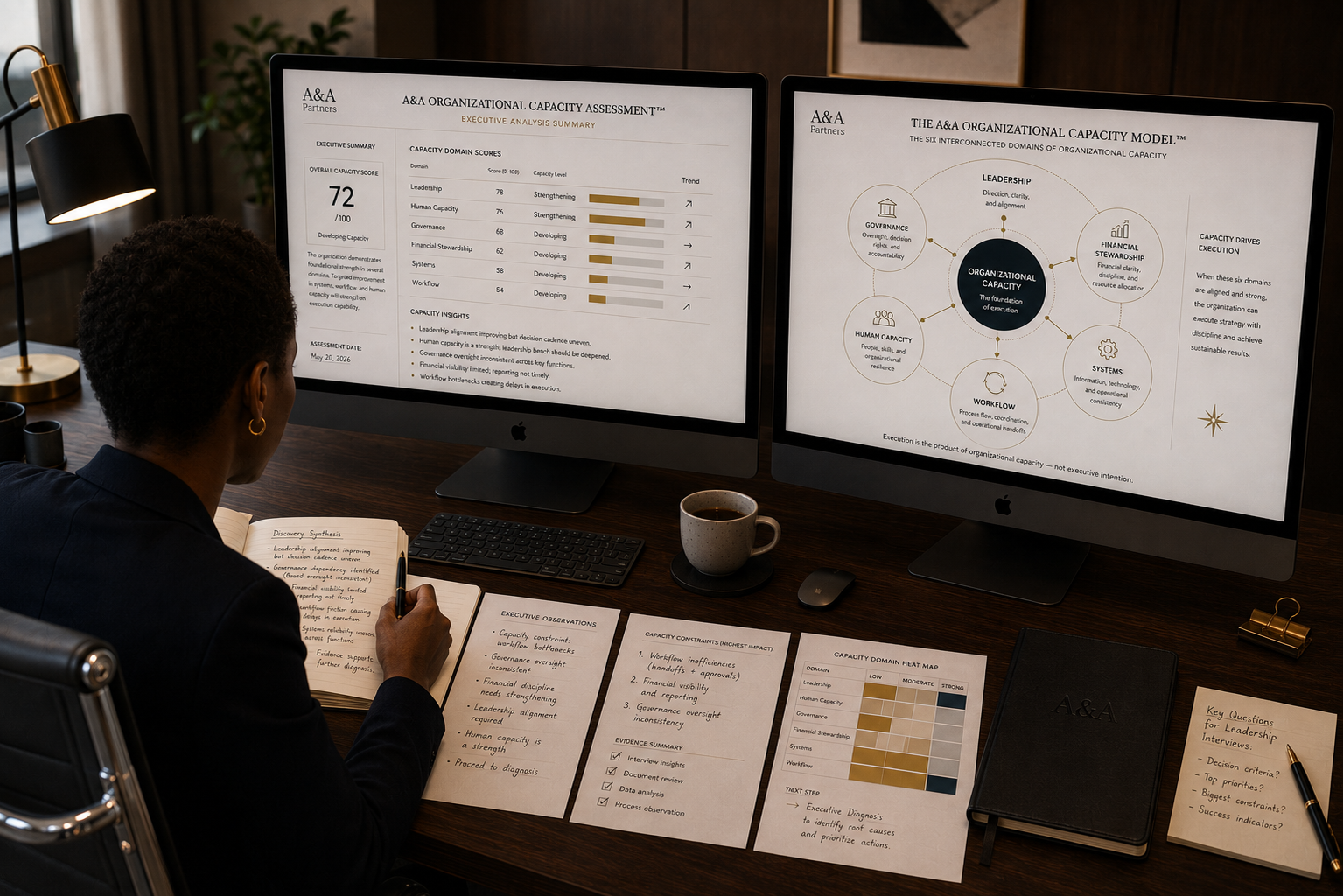
Organizations do not execute through isolated functions. They execute through the interaction of the systems that support leadership.
The symptoms are visible.
The condition isn’t.
Executive diagnosis reveals the condition limiting execution.
03 — EXECUTIVE DIAGNOSIS
We distinguish symptoms from organizational conditions.
Executive Diagnosis brings leadership perspective and organizational evidence together. A&A interprets what the evidence means, identifies the conditions shaping performance, and determines which issues require executive attention.
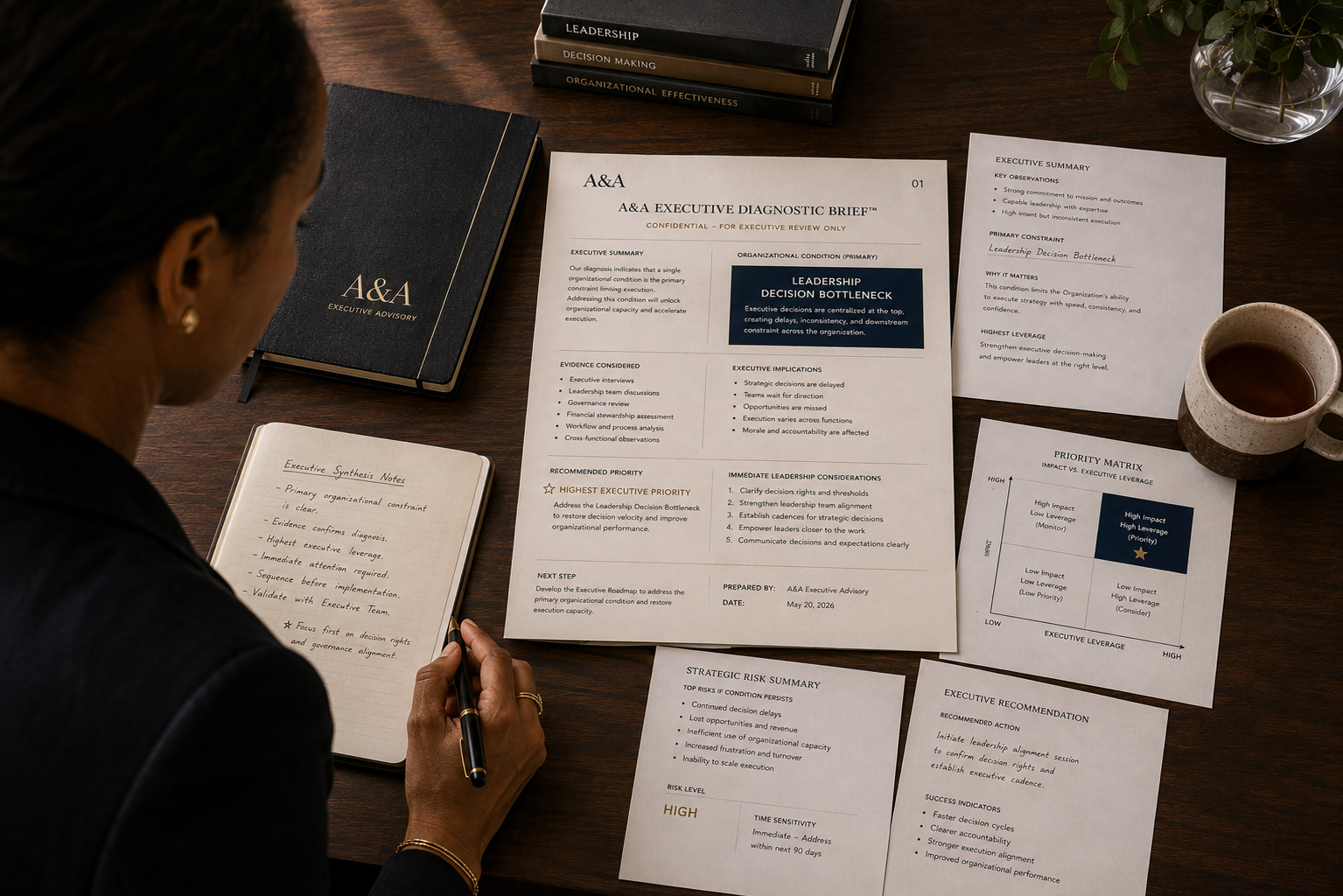
Diagnosis identifies the condition. The roadmap establishes how the organization will respond to it.
04 — EXECUTION ROADMAP
We translate diagnosis into coordinated action.
The Organizational Execution Roadmap converts executive diagnosis into a coordinated sequence of priorities, ownership, governance, and organizational change.
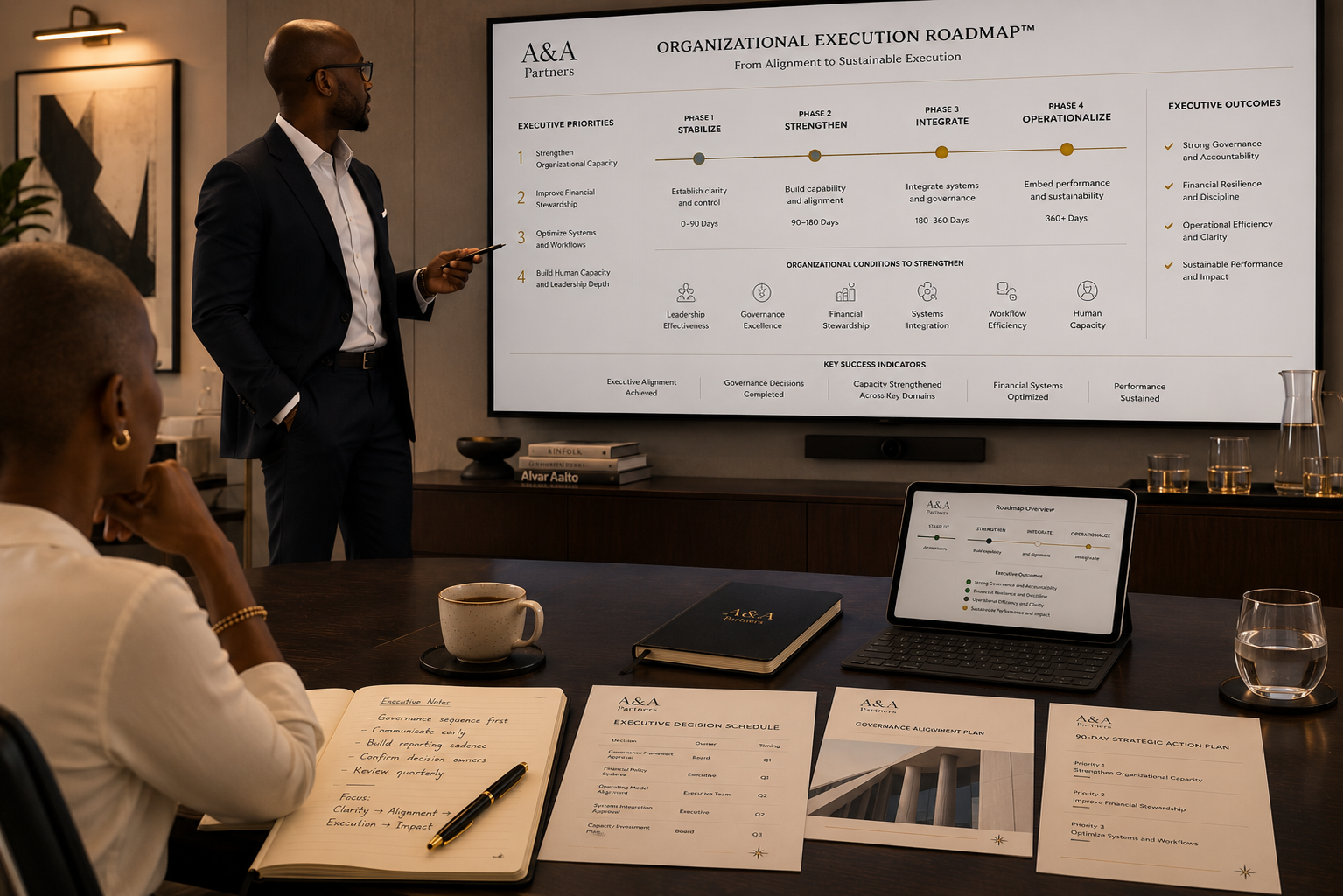
The roadmap creates movement only when ownership, evidence, constraints, and decisions remain visible.
05 — EXECUTION / CAPACITY IN PRACTICE
The work becomes sustainable when disciplined execution becomes the way the organization operates.
Capacity in Practice is the point at which the roadmap becomes part of the organization’s operating rhythm. Leadership reviews priorities, examines evidence, addresses constraints, makes decisions, and strengthens organizational capability through repeated practice.
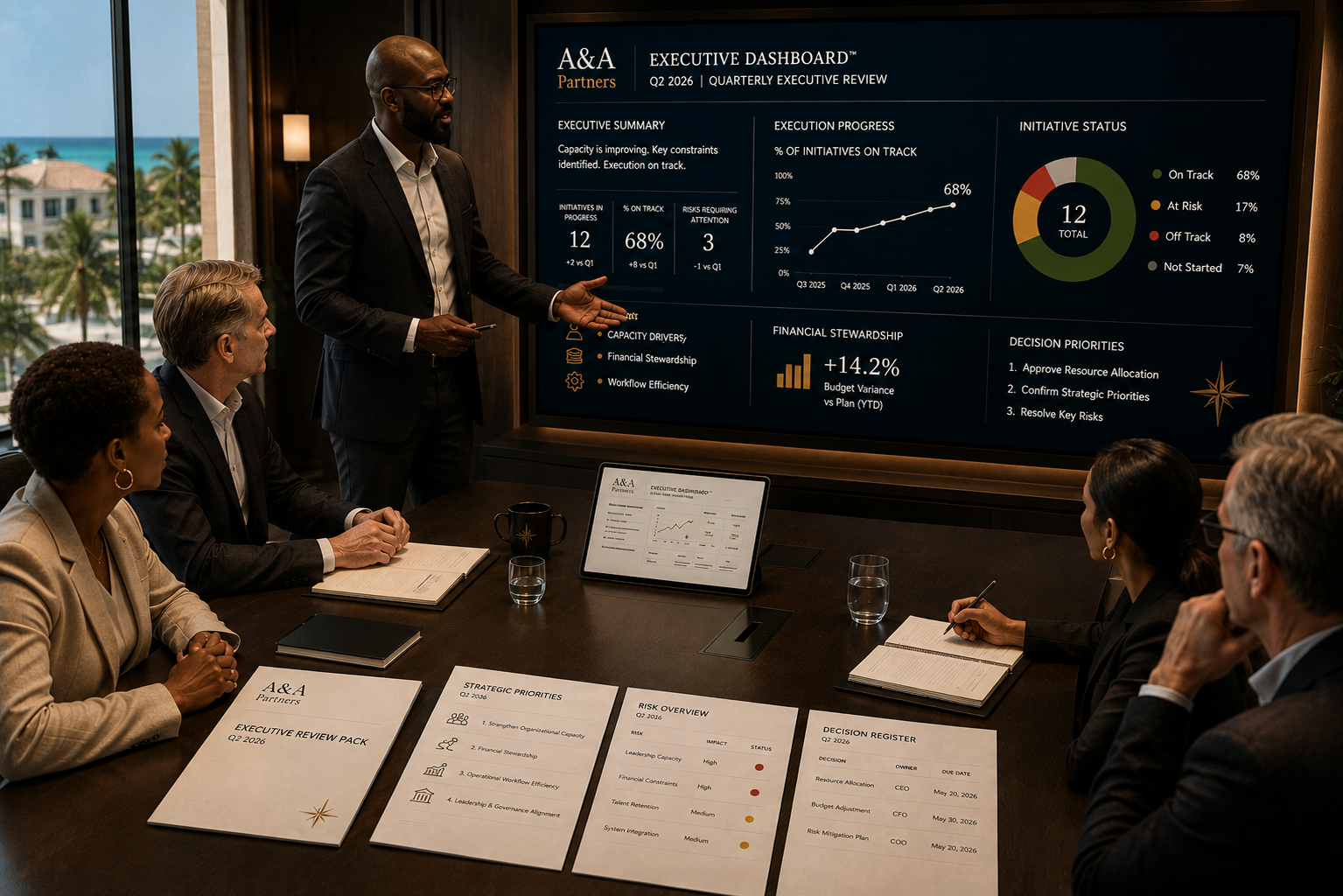
Capacity is not something an organization possesses once. It is something leadership and the organization continually practice.
THE A&A EXECUTION ARCHITECTURE
──────── ✦ ────────
Every engagement is different.
The architecture behind it isn’t.
Every engagement responds to a different organization, leadership team, and strategic context. The methodology behind the work remains disciplined and consistent.
01
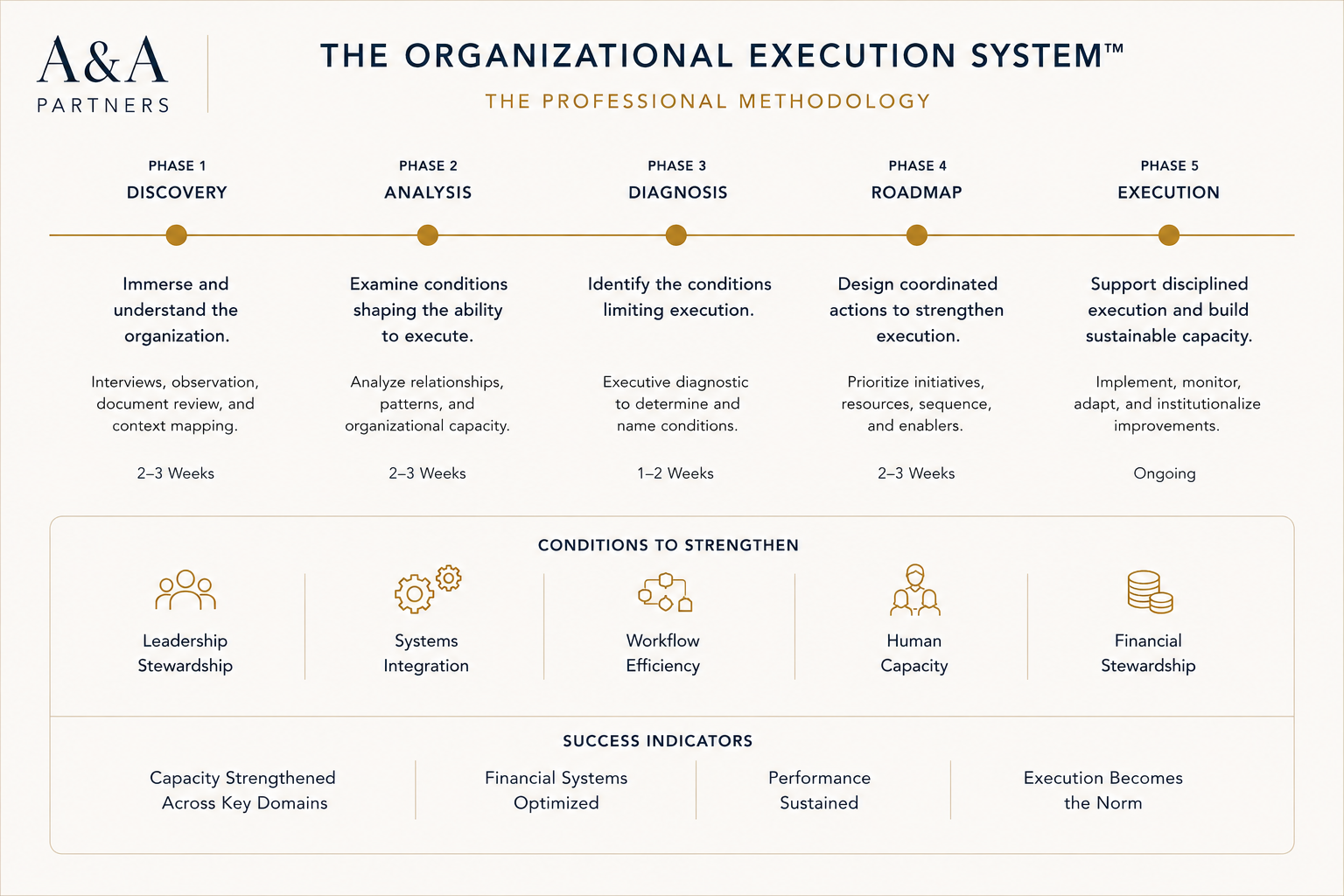
The professional methodology
that defines how we work.
──────── ✦ ────────
02
The executive operating environment
that makes execution visible.
──────── ✦ ────────
03
Decision intelligence that directs
executive attention.
01
Organizational
Execution System™
The professional methodology that defines how we work.
The Organizational Execution System™ provides the disciplined methodology behind every A&A engagement. It establishes the professional standards, analytical discipline, and execution principles that guide every stage of an A&A engagement.
It governs how A&A:
- Structures engagements
- Gathers and analyzes evidence
- Develops executive diagnosis
- Designs organizational interventions
- Monitors implementation
- Evolves systems over time
━━━━━━
✦ The foundation of every engagement
02
Organizational
Execution Workspace™
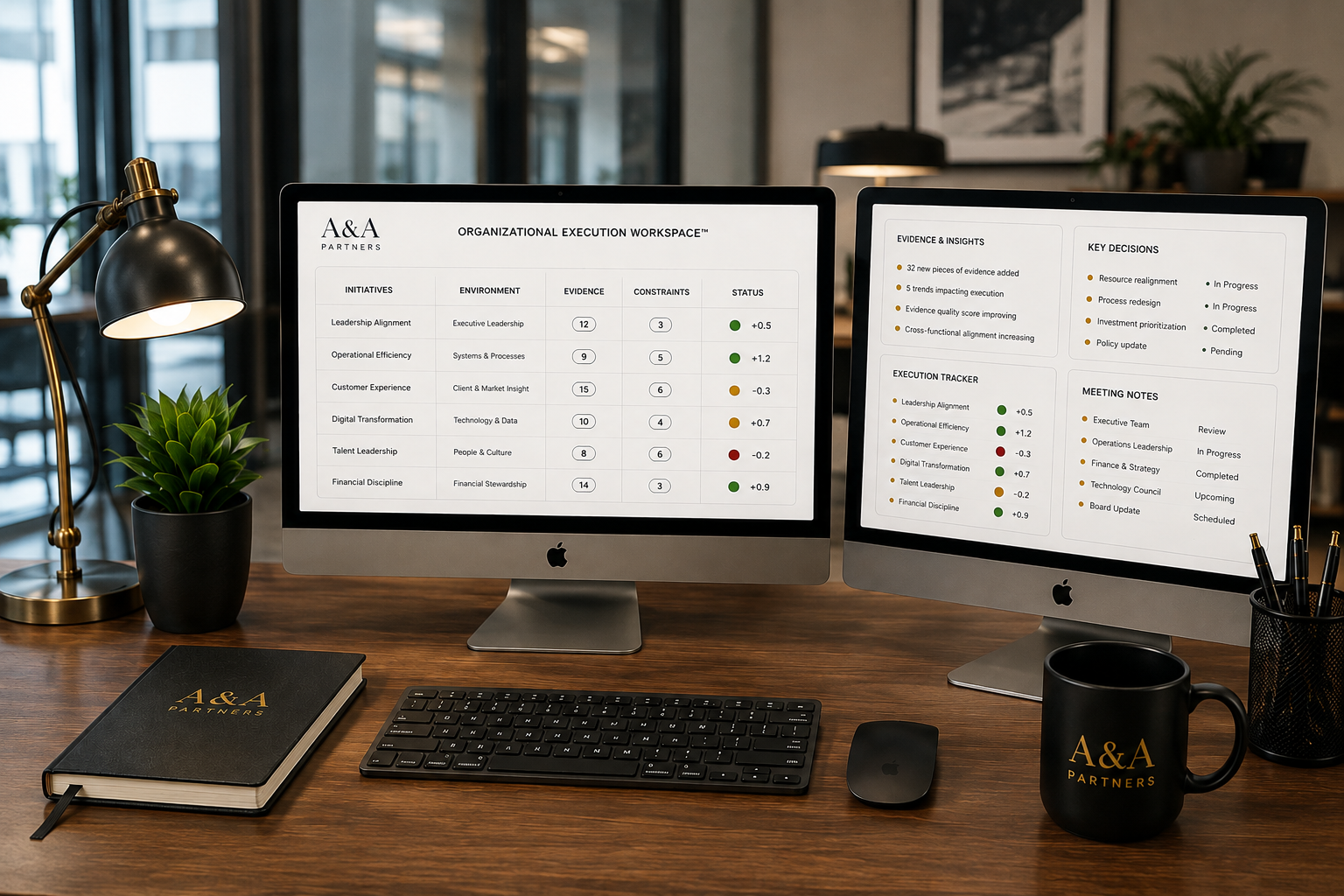
The operating environment where strategy becomes visible.
The Organizational Executive Workspace™ creates a shared environment where executives can see priorities, decisions, constraints, ownership, and progress in one place.
Rather than relying on fragmented reports, spreadsheets, and conversations, the workspace provides a structured view of the organization’s execution environment.
The workspace may include:
- Strategic priorities and initiatives
- Evidence and executive observations
- Decisions and ownership
- Constraints and dependencies
- Execution status and progress
- Executive actions and follow-through
━━━━━━
✦ The workspace creates visibility. Visibility creates accountability.
03
A&A Executive Dashboard™
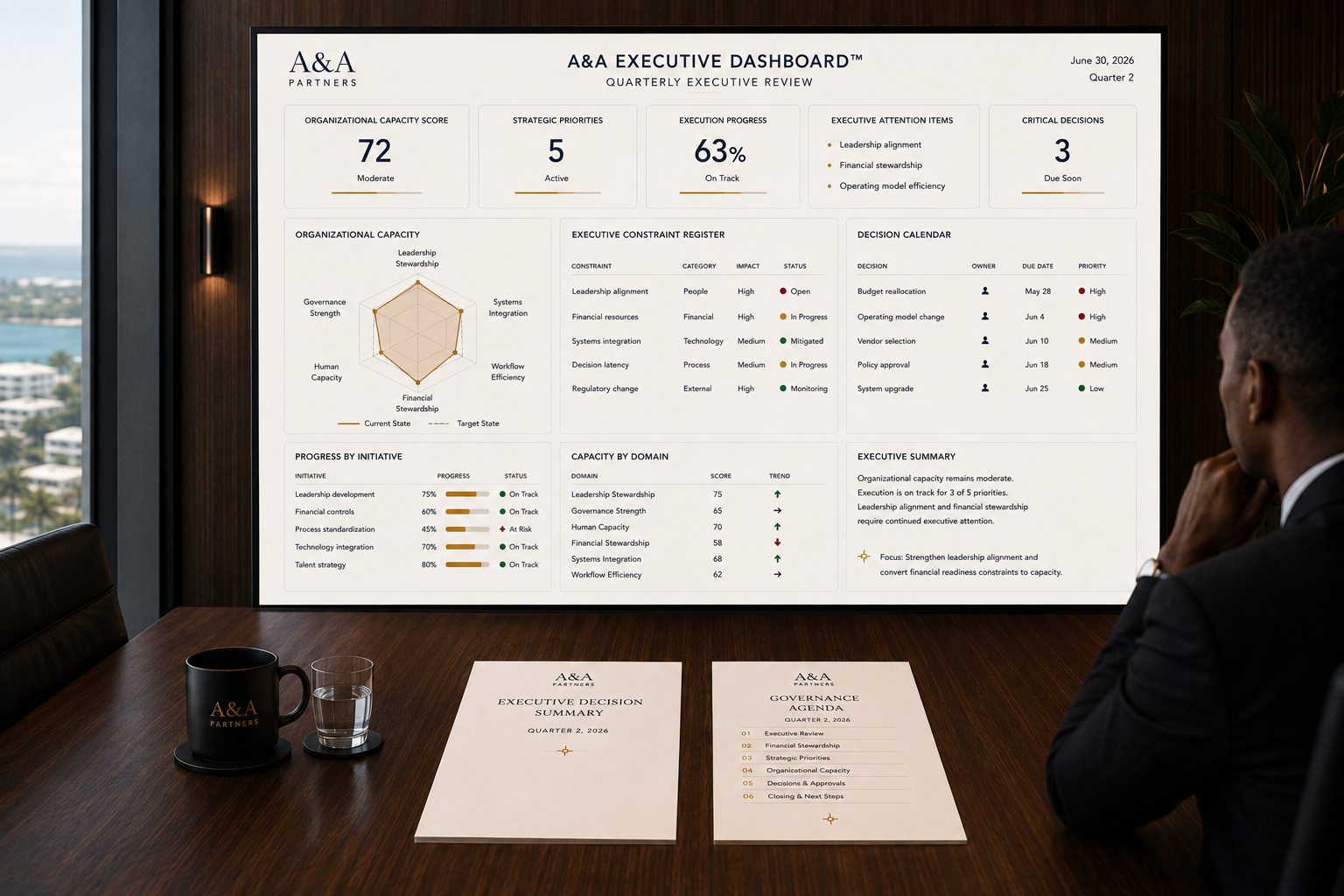
The executive view of what requires attention.
The A&A Executive Dashboard™ translates information from the Organizational Executive Workspace™ into a focused view of the priorities, constraints, decisions, and organizational conditions requiring executive attention.
Rather than asking leaders to navigate fragmented information or operational detail, the dashboard brings forward what matters most for executive oversight and decision-making.
The executive view includes:
- Strategic priorities
- Organizational capacity
- Initiative progress
- Critical constraints
- Decisions requiring attention
- Emerging risks
- Executive actions
━━━━━━
✦ Executive clarity. Stronger execution.
HOW THE ARCHITECTURE WORKS
A connected system for organizational execution.

The methodology creates consistency. The workspace creates visibility. The dashboard strengthens executive decision-making.

THE WORKING RELATIONSHIP
Advisory that works alongside leadership.
A&A works alongside executives to strengthen the organizational conditions required for execution. We bring an independent perspective, structured analysis, and disciplined follow-through while leadership retains ownership of the decisions that shape the organization.
01 — Executive Partnership
━━━━━━
Direct engagement with senior leadership around priorities, constraints, decisions, and organizational capacity.
02 — Structured Cadence
━━━━━━
A consistent rhythm of executive reviews, working sessions, decision follow-through, and progress monitoring.
03 — Embedded Visibility
━━━━━━
Shared visibility into priorities, ownership, constraints, and decisions, through the A&A Executive Workspace™ and Executive Dashboard™.
✦ Close enough to understand the organization. Independent enough to challenge it.